

How Gemba Buddy works on a real shift
Explaining it takes an hour. Showing it takes five minutes. Below: an Andon call you can raise yourself, and three situations every production manager recognises.
Book a live walk-through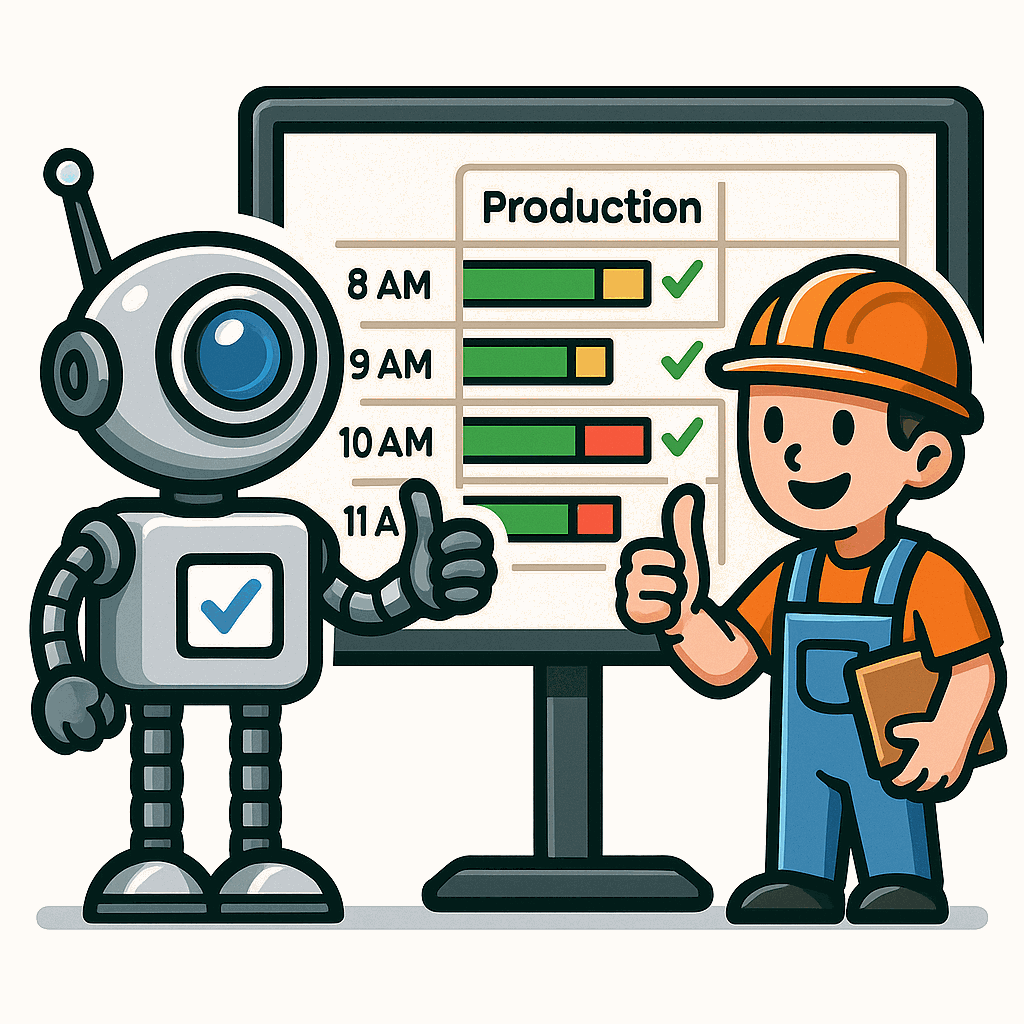
Raise an Andon and watch the clock start
This is the operator screen at the workcenter. Pick a reason, the way someone in gloves would.
Every step is stamped, so reaction time and stop time are facts on Monday morning, not opinions.
What changes on an ordinary Tuesday
WC-12 books 61 pcs against a target of 120
The shift leader sees the gap at 10:02, not the next morning. The reason is already attached to the hour: tooling, 23 minutes, Andon closed at 09:37.
The conversation moves from "what happened?" to "what do we change?"An operator photographs a jig that keeps slipping
Submitted from a phone in 30 seconds, with a photo. It gets an owner and a status, and the person who reported it can see it move.
Ideas keep coming because the last one was not ignored.Two people are off and the shift starts in an hour
The skills matrix shows who is trained on the workcenters that matter, so the shift is rebuilt from data instead of memory.
Staffing decisions take minutes, not a phone tree.Same data, whichever screen is closer
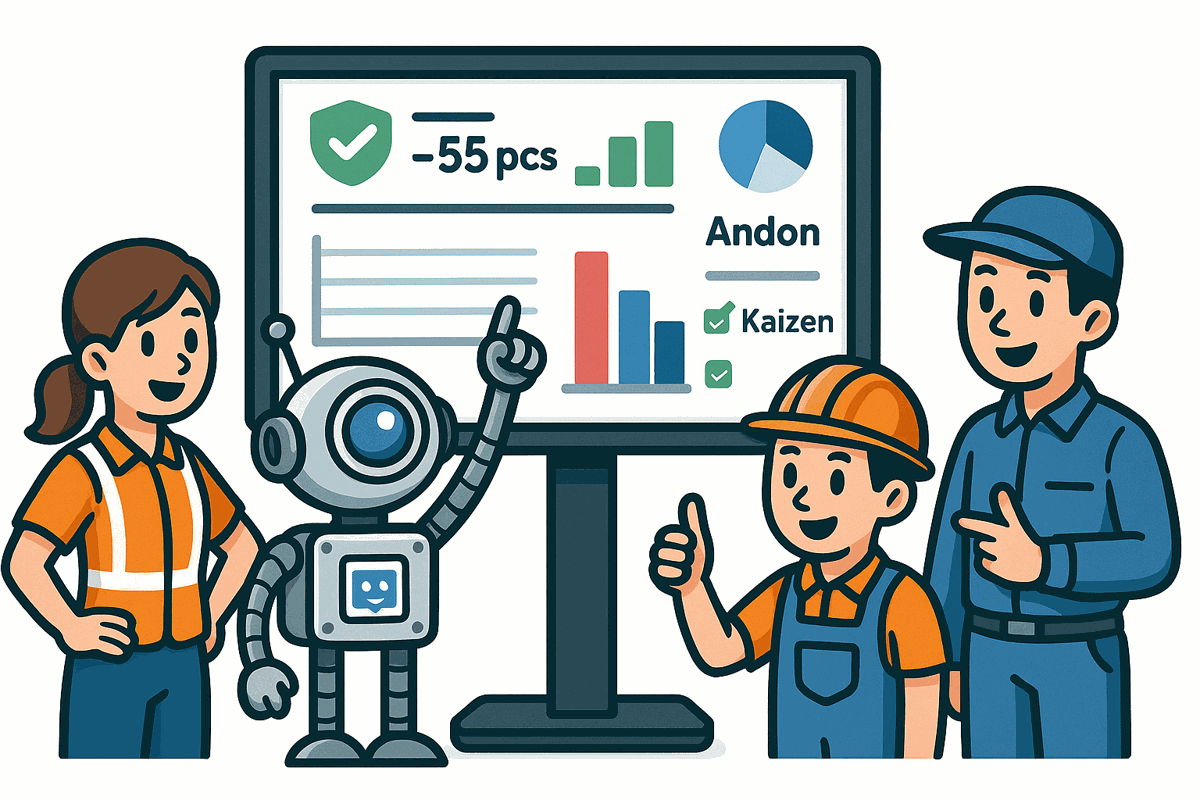
Operators and shift leaders work from a phone at the workcenter: booking an hour, raising an Andon, sending a Kaizen. Managers and engineers use the desktop for the dashboard, routings and the skills matrix. Nothing is entered twice.
Try it on one line for a month. Then decide.
Setup takes a day: upload your users, workcenters and routings, and the afternoon shift is already reporting in the app. No IT project, no integration work, no card.